
Why Your Kids Shouldn’t Grow Up Online
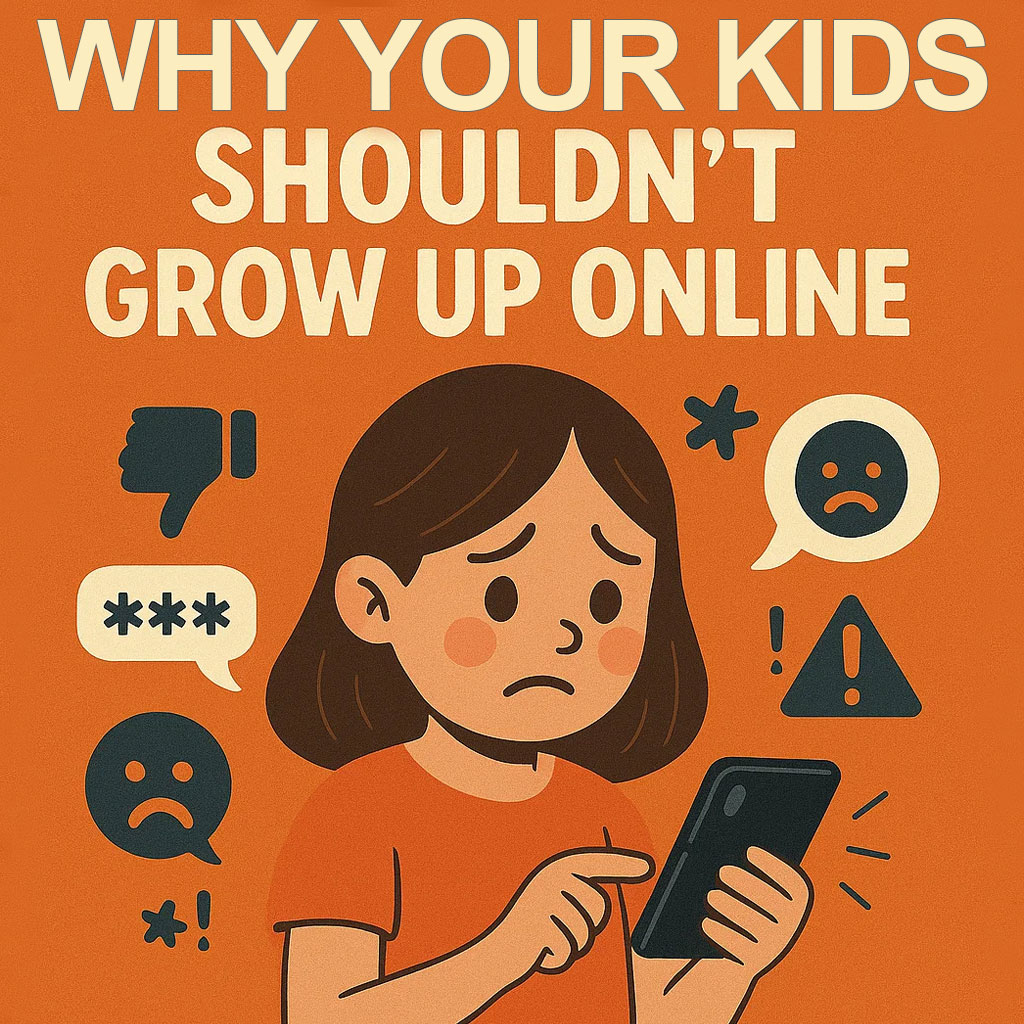
Social media was never built for kids.
It was built to hold attention, reward surface-level behavior and keep people scrolling, not growing.
Yet here we are, watching a generation raised with phones in their pockets and timelines in their heads. For parents, it’s easy to overlook the slow drift from playtime to screen time. But what gets lost in that drift matters more than most people realize.
Let’s talk about it.
Kids live in comparison mode by default. They’re trying to figure out who they are, how they fit in and what matters. When their main window into the world is filtered highlights and curated perfection, it quietly distorts how they see themselves. What feels like casual scrolling becomes a loop of self-doubt they don’t have the tools to explain.
It’s not just about self-esteem. It’s about sleep, too. Phones don’t just stay on at night, they steal the rhythms that help kids rest. Blue light disrupts melatonin. Notifications create tension. Even when they finally fall asleep, it’s not the kind of rest they need. And when they wake up, that same feed is waiting.
Something else fades too – movement. Sunlight. Real play. When kids spend more time online than outside, their bodies feel it. So do their moods. Physical activity isn’t just about fitness, it resets the brain, builds resilience and lets them connect with the world in ways that pixels never will.
Ironically, too much “social” media undermines the very skills it claims to support. Face-to-face interaction teaches empathy. It teaches timing, tone, body language, all the unspoken elements that make relationships real. On a screen, those get flattened into emojis and reactions. Over time, it shows.
There’s also the darker side. Cyberbullying is not just a fringe issue, it’s actually quite widespread and it hits hard. When conflict plays out online, it can feel inescapable, add in the false sense of anonymity and the harm can become both more frequent and more intense.
And then there’s privacy. A lot of kids post without really understanding how far their content can travel or how long it stays online. Their digital footprint isn’t just about what they share now, it’s what might resurface years later, when it matters most.
Academic focus also suffers. The constant pull to check, swipe and scroll doesn’t just interrupt homework, it erodes attention spans and makes deep concentration harder to access. Over time, school performance can slide without a clear cause. But the patterns are there if you know where to look.
We also need to be honest about design. These platforms aren’t neutral. They’re engineered to be addictive using behavioral psychology to keep users coming back. For kids, that means they’re being trained to need their phones before they’ve even figured out how to self-regulate.
While they worry about missing online trends, they’re often missing something more important – life itself. Hobbies go under-developed. Adventure gets replaced by scrolling. Real-time laughter, shared meals, the spontaneous moments… they can all start to fade.
That’s not something to ignore.
None of this means we need to ban all screens but it does mean we need to lead. To draw lines. To model balance. Introduce some friction into the loop. Swap smartphones for simpler devices when it makes sense. Open up space for boredom, creativity and presence.
Because the best version of your child doesn’t live in their feed.
Your child lives here. In the real world.
And they’re waiting for more of it.

