
Smartphones and Social Media: A Family Affair – Why Parents and Kids Both Need to Look Up
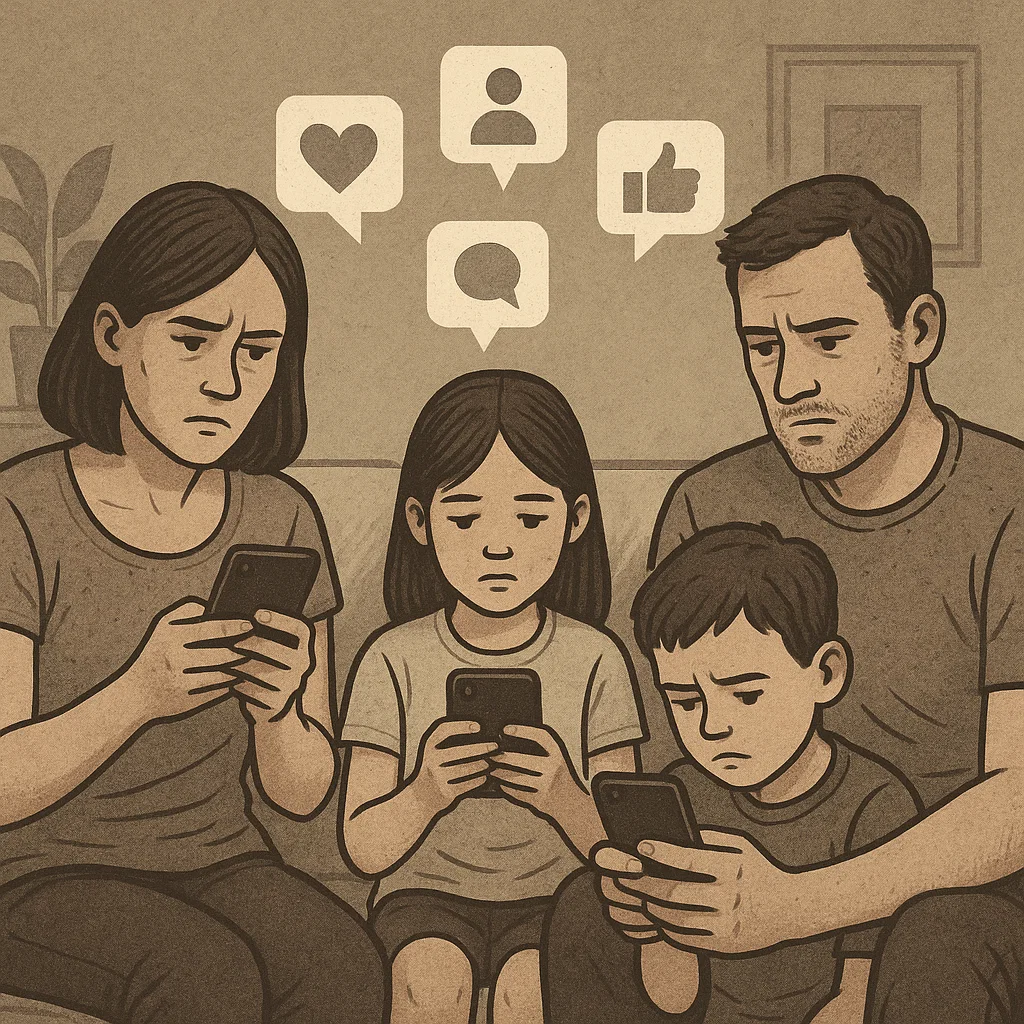
We live with screens. They wake us up, walk with us, sit at the dinner table. In some homes, they speak more than the people living there. It’s easy to think of this as a generational issue. Easy to point at teens, at children, and say they’re addicted.
But the truth is this isn’t a kids-only problem. It’s a family pattern. One that begins with the adults in the room.
We scroll while they talk. We reply while they wait. And little by little, we teach them that presence is optional.
For Parents
- Lead by Living It
No rule works if it’s not modeled. Kids may hear what you say, but they watch what you do. If you’re answering emails during breakfast or glued to your screen at bedtime, they don’t learn balance. They learn to mimic. - Attention Fragmented
Dinner conversations fade into background noise when someone’s on their phone. Eye contact drops. Laughter gets cut short. The moment passes, unnoticed. - Emotional Distance
Studies show a link between parents phone use and reduced emotional connection with children. Kids feel unseen when a screen wins your focus. That absence becomes normal. - Digital Footprints, Not Always Chosen
Posting every milestone may seem harmless, even sweet. But your child didn’t ask for their face on your timeline. Their future may not appreciate your version of their past.
For Kids
- Social Delay, Quiet and Slow
Face-to-face interaction teaches nuance. Tone, timing, body language. Screens shortcut all of that. And without enough practice, those muscles fade. - Learning Loses Focus
Even silent phones in a classroom change the environment. The brain splits attention. Performance slips. - Mental Weight Builds
Social media makes kids compare. Their body, their life, their likes. Over time, the pressure bends self-worth. Anxiety creeps in. Joy dulls. - Sleep Suffers, Slowly
Screens in bed don’t just keep kids up. They steal the deep rest growing minds need. Tired brains struggle to learn, remember, or stay calm. - The Risk of Online Harm
Cyberbullying isn’t rare—it’s rising. So is access to content too heavy, too fast, too unfiltered. Exposure happens early, and sometimes without warning.
For Everyone
- The Pull Is Real
Smartphones aren’t neutral. They’re built to hold you. Scroll, refresh, repeat. Adults get stuck in the loop just as fast as kids do. - The Body Feels It
Posture curves. Eyes strain. Movement drops. Tech overuse doesn’t just shape habits—it reshapes the body. - In-Person Becomes Awkward
The more time spent in digital spaces, the harder real presence can feel. Pauses stretch longer. Conversations stumble. We forget how to just be.
Steps Toward Digital Strength
- Set Shared Boundaries
Decide together what’s off-limits. Dinner. Bedtime. Long car rides. Keep those protected. - Mark Tech-Free Places
Make rooms that invite conversation. Living spaces. Bedrooms. Keep those sacred. - Take Breaks, On Purpose
Short detoxes teach control. One hour. One evening. Start small. Watch what changes. - Don’t Preach. Embody
Say less, show more. Pick up the book instead of the phone. Let them see you choose presence. - Make Room for Other Joys
Offer alternatives that don’t need a screen. Paint. Run. Garden. Play. Real life doesn’t compete—it grounds. - Keep the Talk Ongoing
Ask what’s happening online. Listen fully. Stay in the loop without judgment. Make home a place they want to share. - Teach by Framing
Explain privacy. Explain permanence. Explain what posting means before they do it.
No one needs to quit technology. But we do need to wake up.
Screens will always ask for more. But your attention is finite. It’s sacred. Where you place it shapes your children’s lives.
Look up more often. Not because you have to. Because they’re watching.

